Learning objective

Discussion and acknowledgement being denied permission, rejection, feelings of shame and disappointment. 

Take home messages

  • Knowing how to accept a no is important for all relationships.
  • Rejection is normal and happens to everyone.
  • You can feel disappointed, but it is important to process those feelings in a healthy way.
  • No means no. Do not try to convince someone to say yes.

Materials

Before you get started

Before you get started

  • Protective interrupting - Teachers need to know and understand how to use this technique to prevent students form potentially disclosing sensitive information or abuse in front of other students.
  • Dealing with disclosures - Teachers must be aware of the school and legal procedures if a student discloses personal issues, particularly disclosures of sexual abuse.

Learning activities

Group agreement

5 minutes

Teaching tip: A group agreement must be established before any Relationships and Sexuality Education (RSE) program begins to ensure a safe learning environment. Read: Essential tools: Establishing a group agreement for tips on how to create one and what to include.

  1. Revise or create the class group agreement.

Trigger warning: Let students know you will be talking about relationships, both healthy and unhealthy relationships. Reiterate you want everyone to have safe, healthy, positive relationships, and while we will be promoting healthy behaviours, we do need to discuss unhealthy behaviours. Remind students of their right to pass and to speak to teacher/other support if required. 

Positive risk brainstorm

10 minutes

  1. Ask: 

    What can you think of in life that requires taking a “positive risk”?

    (A positive risk means that the outcome is wanted, for example applying for a job or asking someone out).

  2. Write answers on the board. Some other examples to list: applying for TAFE/Uni, applying for a leadership position, trying out for a team, trying to beat a score, playing in a grand final, facing a fear, performing, entering a competition. 
  3. Explain: 

    When you take a "positive risk" and you do not get the outcome you want, that can be called being rejected. Rejection is when you try for something you want and get turned down, not accepted or are told no. It can make you feel sad, angry, disappointed and sometimes insecure. All of these feelings are normal. Being rejected doesn’t mean there is anything wrong with you, but it’s important to remember that there is nothing wrong with the person who rejected you either. 


Responding to rejection

20 minutes

  1. Put class in small groups (3-4 people)
  2. Tell the class that you'll be watching a video about how to respond to rejection. Ask the class to pay attention to what messages they heard and what strategies were used to look after themselves after a rejection.
  3. Play video

     Dealing with rejection.

  4. After watching the video, ask the class to discuss in their groups, the main messages they noticed in the video. 
  5. Once they’ve had 5-10mins to brainstorm in small groups, ask them to share back to the whole class. 
  6. Main points are below in case some key points aren’t picked up by the class:
    1. Every risk comes with a chance for rejection
    2. Rejection hurts but it is a normal part of life
    3. Accept the decision of the person/thing that rejected you and try to move on
    4. Focus on you – talk to someone you trust, think of what’s great about you and do things that make you feel good
    5. Being rejected doesn’t mean there is anything wrong with you or that you should stop trying


Rejection planning brainstorm

  1. Class to move back to individual seating. 
  2. Everyone to receive a piece of A4 paper. Ask students to fold the paper so the page is broken up into 4 boxes (half then half again to make a cross). 
  3. Students to answer 1 question per box using the front and back of the paper. 
  4. Let students know that they do not have to share their answers, this is a private brainstorm, but they’ll be invited to share if they like. 
  5. Read one question out/write on board at a time:

    Can you think of a movie/TV show where someone was rejected/told no – what happened? 

    What do you think of how the person reacted to the no/rejection?

    Think of a time that you’ve had to say no to someone you’ve loved/liked. How did you feel?

    How would you like those people to respond to your no?

    How would you not like those people to respond to your no?

    Think of a time that you were rejected – how did you feel?

    When you get rejected, who would you talk to about your feelings? 

    What would make you feel better about yourself after a rejection?

Teaching tip: If you’ve run out of time for students to do this individually, ask the class to give suggestions from their small groups but change the question to be more general and less personalised i.e. what could someone do when they’re rejected? 


3-2-1 Reflection

Reflection questions 

5 minutes

  1. Ask:

    Why do you think learning about positive ways to deal with rejection is important?

    How can you respectfully accept a no/rejection?

    How can you look after yourself after a no/rejection?

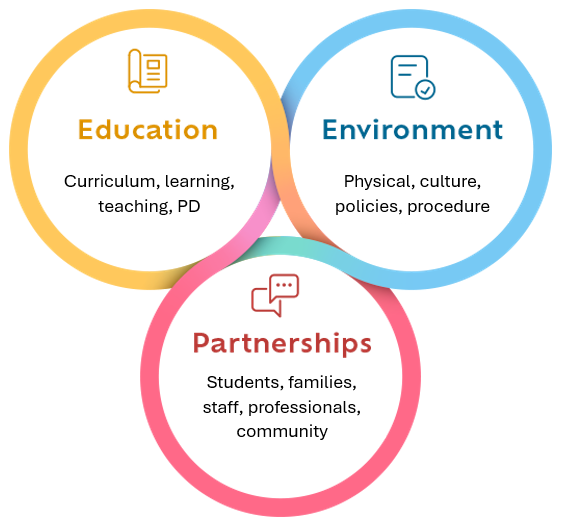
Health promoting schools

Refer to Guiding principle: Health promoting schools - a whole school approach for further information on implementing a whole school approach. 

Partnerships

Family 

  • Talk Soon. Talk Often: a guide for parents talking to their kids about sex is a free hardcopy resource that can be bulk ordered by schools and website. Send a copy home to parents prior to starting your RSE program. The booklet offers ages and stage related information on puberty (and other topics) so that parents can reinforce the topics covered in class. (How to order hard copies.) Provide the link to parents on school websites and social media.
  • Provide students with a copy of Puberty booklet to take home and read and discuss with their family. 
  • In school newsletters, include a question similar to those in the consent clarification game that offers an A, B or C answer so that students and families can discuss and share their thoughts on different situations and circumstances.
  • Run a parent and child evening session to run these activities in family groups to open healthy discussion about rejection. 

Staff

  • Ask dance/drama/media/music teachers if they can incorporate this topic into their work with potential to showcase performances to the whole school.

Education

Learning

  • Ask the drama and arts teachers if they can draw upon plays or art pieces that portray consent related scenarios to imbed for cross sectional knowledge.
  • Ask sport teachers to discuss how we show consent in sport i.e. shaking head, crossing hands, saying don't pass etc. 

Have a question?

Email the GDHR Team at gdhr@health.wa.gov.au

Contact Us